Tag Archives: dungeons and dragons

My friends ruined Baldur’s Gate 3 for me

This is going to be a post where I complain about something that I’m very lucky to have, which is a consistent DND group. I know for a lot of people, it’s something they can only wish for.

We’ve been playing together for about nine years, maybe more. People have come and gone but we’ve been pretty consistent for the most part. Considering how long I’ve been playing this game, you could say I have a particular fondness for it. So, when the money was right, I picked up Baldur’s Gate 3 because it was just more DND. I should have loved it.

I started playing it and got through the introduction off of the mind flayer’s ship and started assembling my party. It’s fun and a well made game. The story seems like it’s going to be engrossing. I’ve heard how much people love these characters.

But I found myself after two hours in, starting to get tired of it. I wasn’t disliking playing it but I just couldn’t get myself over the hill on it. I went back to playing Skyrim and modding the hell out of that when it hit me.

It wasn’t what DND is to me.

DND is a collaborative storytelling tool that everyone gets to get a hand on. And the hands that add to my stew are not expert but they know how to make that stew tasty as hell.

I won’t name names but I have one that I call Big Moves because throughout our current campaign, she has consistently made moves that have made me have to upend everything I’ve done. I showed them this portal that would take them to a different world where they could do things. She thought that no one should have that much power and blew it the hell up. The person creating the portal is now an enemy.

Did it annoy and shock me at the time? Of course, but it opens up new opportunities for me.

Then we have our resident murderhobo who I rolled a random encounter and they immediately robbed him. They took the salted beef and onions he had. Mostly out of spite for not having better things. She has blown up her fellow adventurers on multiple occasions.

Then we have the guy who I’ve turned into John Hammond and his ex into Ian Malcolm as they argue about the ethics of cloning and DNA manipulation. He has a suit made of flowers that acts like Iron Man armor.

Then we have the Luxodon dominatrix/inventor who has recently decided to multiclass into bard and use the language of dance to showcase their bardic abilities. Her mom is Dolly Parton from the Best Little Whorehouse in Texas. Why? Don’t worry about it. She has flying sex toys that she uses to attack people.

We have the Haregon ninja assassin who tried to swim into a shark’s mouth and got chomped in half when he rolled a nat 1 on his dexterity check. He got better.

Finally, we have a tabaxi cleric that tries desperately to get them to act civilly. It hasn’t worked.

I gave them this airship:
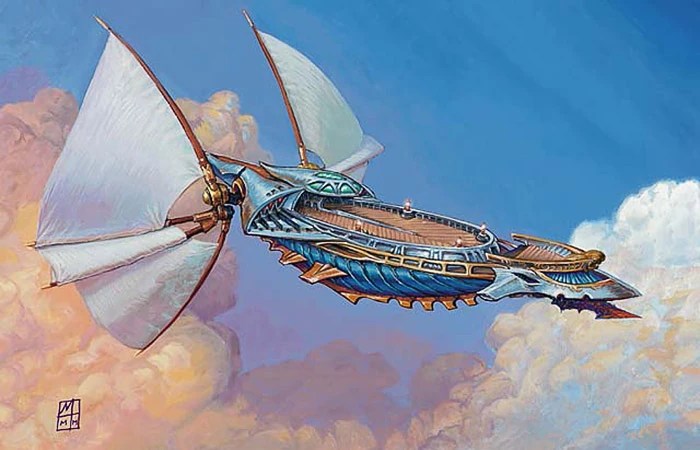
So, cool.

They named it the Good Ship Lollipop.

For me, I think the problem with Baldur’s Gate 3 is that it reflects a future that I don’t want. One where I’m playing DND without these people. When I play it, I just miss my friends.

DND Talk: Give the Deck of Many Things Early

In an earlier post I talked about the use of a D20 while writing. But let’s talk about DND in general. Think of me pulling up a chair, turning it around and sitting on it. Let’s rap, kids.

What is the Deck of Many Things? It’s a rare magical item in DND that allows the user to pull a number of cards that they announce to the table. These cards have a wide variety of uses such as giving you a rare magical item, summoning an avatar of death to kill your character or just making them disappear completely to giving them the ability to cast the wish spell. Each card can be a campaign changer. But hey, so can every roll.

And that’s why I think you should give it to them early. Usually, I’ve seen people give the deck when their players are about to hit double digit levels. Mostly, I think to make sure that they can defeat the avatar of death if they pull that card. I think that’s cowardice. I think that you should hand it to them early and see what they do with it.

I gave it to my players in the current campaign at level 6 or so. The person who has it, is known for big moves. She’s pulled three cards. One got her a fighter that is having an existential crisis over being born and having no past. The other did summon the avatar of death, which she one shotted with a very lucky roll. She pulled the void card, which saw her soul ripped from her body and we had a lot of fun with that too. The final was the gem card, which saw money become irrelevant to their game.

I think that it was a net success. Sure, the gem card offset the economy for my game but how much was it really going to change? Why would I want my players to be poor forever? It just gives them different strategies to use.

The fight with the avatar of death was just funny in universe because she summoned this monster and killed it in the middle of a marketplace.

Giving them this deck early gives them the chance to screw themselves over in so many ways. It opens up interesting paths and that’s the important thing. So, hand them that or the wonderful bag of magic beans and have some fun.

Hell, why not both?

Your Writing Can Benefit From a D20

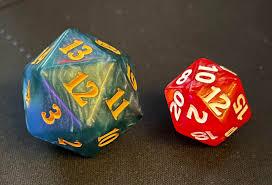
So for those of you in the less nerdy echelons of the world, you might not know what a D20 is. Below you’ll find a picture of it.

It’s the main dice used for the game, Dungeons and Dragons. Everything comes from this dice. The way it works, is that the dungeon master will tell someone to roll for something. They have various modifiers that add or subtract from the roll. The roll decides on how well they’re going to do.

For example, the DM sets the amount that they have to roll over. So, say you want to have your character jump over a small river. He’ll set a challenge of 10. The players roll and if they get above a ten, they jump over it. If they get under, something happens to prevent them from jumping over it.

There are two conditions though that could spell either doom or success for them. Rolling a natural 1, is known as a critical failure and usually means that something terrible could happen to the person. Like they fall into the river and start drowning because they suddenly forgot how to swim.

Then there is a critical success, which is when they roll a natural 20. This means they do a sick backflip over and land like they just won the gold at the Olympics.

Why am I telling you about this? Well, because I think that these mechanics make writing feel more real and random. In movies, we see the heroes fail usually about three times and then they succeed. We know they’re going to succeed. We know that they’re going to win.

But what if we didn’t? What if something so random happens that it completely changes the path of the story? That is the joy of using a D20 in your writing. You can suddenly throw in a twist that no one, including yourself, was expecting.

Another example, in one of my games, I had my players involved in a brutal death race in massive weaponized cars. In a reference to the fact that Speed Racer’s little brother and pet monkey constantly hid in the trunk of Speed’s car, a great ape(pictured below) was hidden in the trunk of the car in front of them. It was supposed to jump at them, land on the hood, obstruct their view and attack them.

Why didn’t you roll better you damn, dirty apes!

Well, it rolled a natural 1.

I had to follow through with the consequences, so it came up short, landed in front of the players’ car and was immediately run over and killed. Excitement averted, plan thwarted.

We all lost our goddamn minds with how funny it was. We still talk about it in the newer campaigns that we’ve done.

It’s things like this that make me keep rolling for my characters when I’m writing. Yes, you have to keep one hand on the wheel so that your story isn’t horrendously unbelievable but I do think that it adds a certain randomness to your stories that can make them truly unique.

It also helps with my character building. I’ll sometimes give them stat blocks like they are DND characters. There are six stats that make up a DND character: Strength, Intelligence, Charisma, Dexterity, Wisdom and Constitution. Strength, Dexterity and Charisma are pretty self explanatory. Constitution is how well they handle sickness and drinking things like poison. Wisdom and Intelligence might seem similar but they’re thought of more as street smarts and book smarts respectively. Or as the common phrase goes in describing them: “Intelligence is knowing that tomatoes are a fruit. Wisdom is knowing that they don’t go in a fruit salad.”

Even if you don’t want to try this in your own writing, I think that playing DND makes you a better storyteller whether you’re a DM or a player. It forces you to think on your feet and improvise through solutions. It can lead to beautiful moments between players, where they can work things out that have been bothering them. It is a true joy.